Articles by ""information system""
Showing posts with label "information system". Show all posts

Information system activity refers to those functions of information system which are carried on by information system to provide information. Information system activities are inputs, outputs, storage, feedback  and control.

1:INPUT OF DATA:

Data about business transactions and events are first captured and processed entering as input to the system. Once the transaction is verified by sources documents it is entered to the system for processing. For example data about sale of merchandise can be obtained from invoices sent to customers and record is made on the basis of such evidences.

2.PROCESSING OF DATA:

The goal of any part of I.S is to provide information by processing of data when data is entered to the system.
For example when business transactions are entered to accounting system, it is processed and transformed into ledgers which classify the same nature transaction.

3.OUTPUT OF INFORMATION:

The processed form of information is stored for future use. Large organizations mostly use large data base for storing and retrieving information. The stored information can be used by organizations responsible employees in their routine work. 
activity

4.FEEDBACK OF OUTPUT:

Feedback means that some portion of outputs is given to the system as input to check its reliability.
For example, sale data is communicated to sales managers to check the performance of each region.

6.CONTORL OF SYSTEM PERFORMANCE:

An important function of information system is to evaluate the performance of output. If output is not meeting the standards control measures are taken being it into desired performance level.

Data resource management:

Data are vital organizational resource that to be managed effectively like other important assets. Today any business cannot survive with effectively management of data about internal and external environment. That is why organization and their employees practice data resource management that the set of managerial activities that applies information system and data management tools to manage effectively the organization data. Such as data will be beneficial for all stakeholders of organization who use such data.

Foundation concepts:

Before going further let us explain some foundation concepts used in data resource management.
bs-commerce.blogspot.com

1: Character:

Character is the most logical concept used in data resource management which consists of a single alphabetic, number or symbol. From a user of view a character is the most basic element of data can be observed and manipulated.

2: Field:

The next higher level or data item is field. A field consists of grouping of relating characters. For example: the grouping of alphabets in a person. Name, because name field. Similarly the sales figure may form a sale field. Basically a data field represent on attributes of specific entity. For example an employee salary is and attribute that is used to describe and entity who is employee if that organization.

3: Record:

Related fields are grouped to form a record. In other words the group of related fields is called record. Thus a record represents the collection of attributes that describes an entity. An example of record is a person’s payroll which shows related data fields such as person name, personal number, destination wage type etc.

4: File:

A group of records in data base is called file or table. Thus the employee file would contain the records of frequently classified as inventory file transaction file and document file.

5: Database:

Database is the integration of large data elements into a logically combined data pool. A data base consolidates data which was previously stored in spare file into a logically arranged from for various purposes. Thus data base is a large data element which shows entities and their relationship.

Related articles and contents:


In the modern era computer and information technology the importance of information system (IS) can be judged from the following points.
a.Support of business process and operations.
b.support of business decision making
c.support of strategies for competitive advantages.

1. SUPPORT OF BUSINESS PROCESS AND OPERATIONS:

The lower level of organization consists of department head, supervisors, workers and other technical staff. Their actual performance is communicated to the top management using various performance report for the purpose organization use IS to communicate such reports to the top management.

2. SUPPORT OF BUSINESS DECISION MAKING:

The goal of any part of information system is to provide information for decision making.
Information system thus helps for business decision making management of this level consists of heads of sales regions administration and engineering. These head need timely, quick, and accurate information to control the provide such information which enable the regional heads to function efficiently ad make analysis of sale, expense, investory level and turn over.

3. SUPPORT OF STRATEGIES FOR COMPETITIVE ADVANTAGES:

Information system at this level provides information to managers and those who involves in making strategies for organization. This system provides further oriented information about market products demand and environment changes.

Why business need information technology

Information technology is the combination of computer and network resources to share information within and outside the organization.

Why information technology is importance for business:

To answer this question one must be familiar with the expending role of information technology in present era. Information technology has become a vital component of successful business and organization. They thus constitute an essential field of study in business administration and management to be a manager, entrepreneur of business professional it is important to have basic understanding of information technology like other business function such as finance, accounting and HRM (human resource management). Information technology can help all kind of business to improve the efficiency and effectiveness of their business process, managerial decision making and work group collaboration. And thus enable an organization to gain competitive advantage in a rapidly changing market environment. The use of information technology support product development team, customer support process, electronic commerce transaction or any business activity.
Internet based technology and systems are fast becoming a necessary ingredient for business success in today’s dynamic Global environment.


https://bs-commerce.blogspot.com


TELECOMMUNICATION:

Telecommunication is a type of communication which deals with sending and receiving messages through special media in the form of light waves, electronic signal etc.
The exchange of information using suitable medium in the form of light signals, electronic is called telecommunication.

Trend in telecommunication technology

Trend in telecommunication technology have a great implication on the management. A manager should be aware of the major trends like industry technology one application trends.
1: INDUSTRY TRENDS:
In industry trend private companies provides the telecommunication facility to businesses. Previously government provided telecommunication facilities however now privet companies offer such facility. Number of companies now provides business a choice of everything from local to global Radio and internet services etc.
The explosive growth of internet based technology has widened the ways people use the World Wide Web facilities. In response business had increased the use of internet for E-commerce and collaboration.
2: TECHNOLOGY TRENDS:
Previously business organizations used analog signals for communication. However there were a lot of problems associated with such communication. Now organization ore using digital communication system instead of analog communication. This provides speed performance and reliability. It reduces the cot error frequency and labor. Another technology trend is from copper to fiber optic, as a media of communication.
Copper media is a media with speed barriers and electromagnetic interference. Fiber optic media is free from all such interference.
In technology trend there are a number of open system is veal world which interacts on continuous basis with each other.
3: APPLICATION TREND:
Application ( a set of software) previously used in computers are new shifting to telecommunication technology now, application are developed keeping in mind the telecommunication networks. So to facilitate telecommunication facilities these new application are capable of interacting with other application system in environment which make communication process speedy and most reliable.

IMPORTANCE OF TELECOMMUNICATION/WHY TELECOMMUNICATION IS IMPORTANT:

Telecommunication is an important tool for today’s business organizations. No organization can complete without the successful implementation of telecommunication technology. Organization will have to exchange information for their operations and decision making and using telecommunication technology make possible it. Now day’s organizations managers their information system resources through telecommunication Data, hardware, software, and human resources are controlled by managers using telecommunication technologies. Telecommunication today has attained a great importance as it is a question of success and failure for large business organizations. It will have to pay due attention to telecommunication facilities in order to complete in the global market.


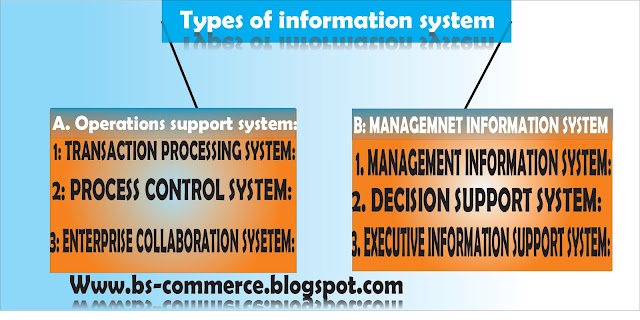
Conceptually information system is classified as under:

A. Operations support system:

Operation support system is designed to provide support to the various operations at lower level of organization following system under this category

1: TRANSACTION PROCESSING SYSTEM:

Transaction processing system record process and summarize business transaction which occurs during normal course of business. They process transaction in two basic ways i-e batch processing and real time processing. In batch processing transaction are accumulated over time and processed periodically. In real time online transaction are processed immediately as they occur.

2: PROCESS CONTROL SYSTEM:

Process control system is designed to the specific production process in a manufacturing organization. These systems continually monitor the process and make proper adjustment.

3: ENTERPRISE COLLABORATION SYSETEM:

Enterprise collaboration system enhance work group and team communication by using organization personal can share research, idea and valuable information among them which promote their work efficiency.
https://bs-commerce.blogspot.com

B: MANAGEMENTINFORMATION SYSTEM:

Management support system provides information to all type of managers to support their effective decision making process. The following systems are used to support variety of decision making.

1. MANAGEMENT INFORMATION SYSTEM:

These systems provide information in form of report to support business decision. For example decision about products, market and quality decision are supported by such systems.

2. DECISION SUPPORT SYSTEM:

These systems provide information for that decision which one of unique nature, for example for lunching of new producer in market selection of advertisement media and its expected budget need careful decision making. By using such systems information are collected about each alternative and a best alternative.

3. EXECUTIVE INFORMATION SUPPORT SYSTEM:

This system provides critical information for MIS, DSS and other sources to support executed decision making process.

4. OTHER CLASSIFICATION OF MANAGEMENT SYSTEM:

Organization also uses several other systems to support operational or managerial decision making. These are discussed as under.
(a):  Expert advice for operational decisions.
(b): knowledge management system share information system to support knowledge among organizations employees.
(c): Functional business system supports various business functions such as accounting and marketing.
(d): strategic information system provides information to enable the organization to gain competitive advantage in the market.